
Modern shopping malls have evolved into multi-experience destinations—blending retail, dining, entertainment, and community spaces. With daily footfalls exceeding 50,000 visitors during peak periods, managing safety, crowd flow, and visitor experience has become a complex operational challenge. Traditional security cameras and patrol staff alone can’t provide the real-time precision needed in these dynamic environments.
People tracking technology is transforming how mall operators protect visitors while unlocking powerful business intelligence. This guide explores how BLE-based tracking systems work, their ROI, implementation best practices, and important considerations for privacy and operational limitations.
Why Smart Malls Need People Tracking Now
Shopping malls are designed to accommodate massive crowds, especially during peak hours, weekends, or special events. Ensuring safety in vast spaces is a significant undertaking. Parents worry about children wandering off, while operators must manage logistical complexities across properties spanning 500,000+ square feet.
Traditional security measures have critical limitations—CCTV suffers from blind spots, and security personnel cannot be everywhere at once. The average time to locate a lost child using conventional methods is 35 minutes. These gaps highlight the urgent need for scalable and precise solutions.
People tracking systems shift from reactive searches to proactive monitoring, fundamentally changing how malls approach visitor safety.
How BLE People Tracking Works: The 3-Component Framework
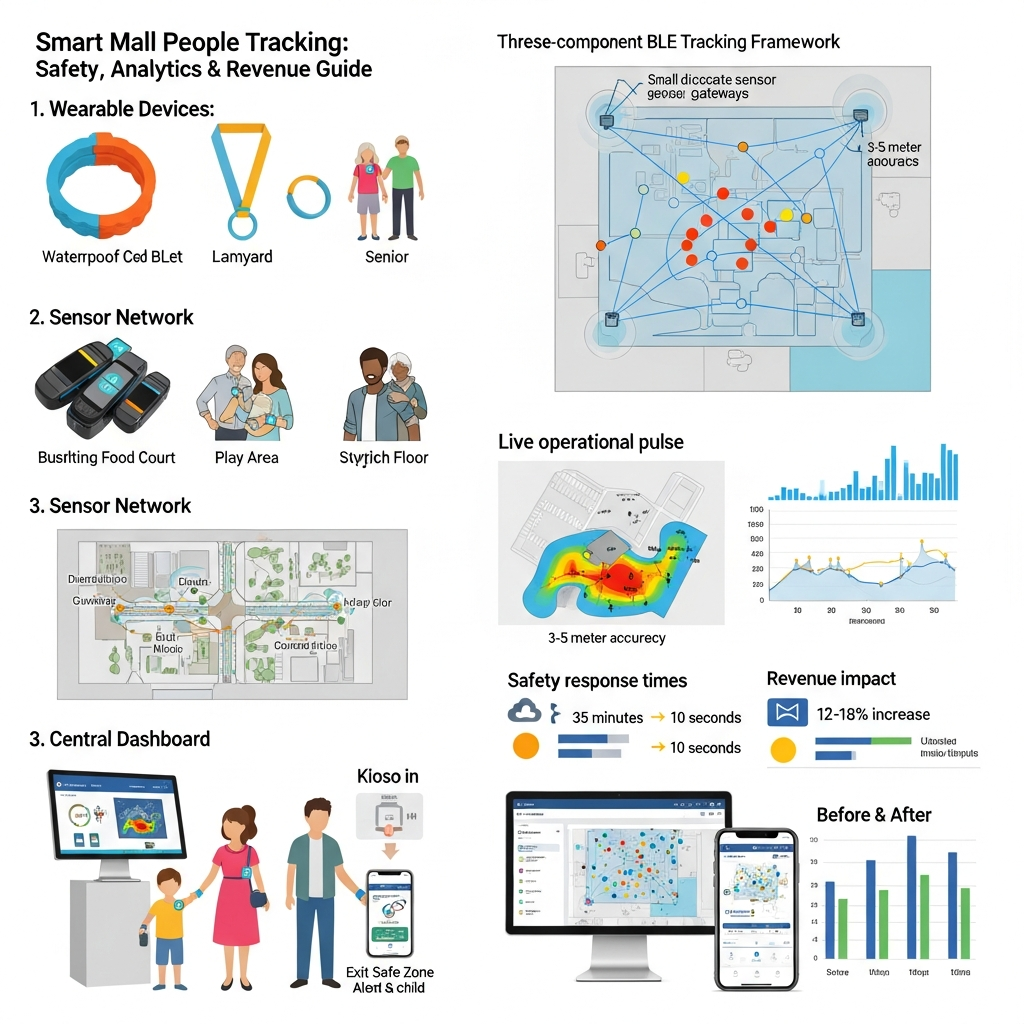
- Wearable Devices: Waterproof BLE bracelets, lanyards, or stickers are issued at entry points. These are lightweight, offer 6–12 month battery life, and cost $4.70–$6.39 per unit in bulk, making them economical for large-scale use.
- Sensor Network: Gateways are installed every 50–100 meters, creating a location grid with 3–5 meter accuracy across the facility, including parking, play areas, and retail floors.
- Central Dashboard: A cloud-based platform displays real-time positions over interactive floor maps, accessible by desktop or mobile. Families can opt in at kiosks, link devices to their smartphones, and receive instant alerts if wearers exit predefined safe zones. Security teams gain a live “operational pulse” of the entire facility.
Three Pillars of Value: Safety, Analytics & Revenue
Safety & Security: From Minutes to Seconds
People tracking enables staff to pinpoint any visitor within 10 seconds, improving response times by up to 70% during emergencies. Geofence alerts notify staff instantly if children leave designated areas. This rapid response reduces liability, insurance costs (by 8–12%), and negative publicity.
Analytics & Operational Intelligence
Heat maps and movement analysis help optimize crowd flow, leasing decisions, and marketing. Peak time forecasting and dwell time data provide actionable insights for staffing and tenant engagement.
Malls can command premium rents for high-traffic zones and drive increased footfall to underutilized areas, as demonstrated in real-world case studies.
Revenue Generation & Cost Optimization
Location-triggered promotions increase conversion rates by 12–18%. Real-time data-driven labor deployment reduces annual costs by $18,000–$24,000. Loyalty integration and premium tracking services offer new revenue streams while enhancing visitor experience.
Privacy-First Implementation: Building Visitor Trust
- Transparency: Clear signage communicates tracking is opt-in and for safety only.
- Consent & Control: Easy opt-out options at any kiosk; families can view and manage their own devices.
- Data Security: End-to-end encryption, 24-hour retention (unless an incident occurs), and strict access controls protect sensitive information.
- Compliance: Ensure adherence to local regulations (e.g., GDPR) and prohibit unauthorized data sharing.
Potential Limitations & Considerations
- Device Compliance: Some visitors, particularly children, may remove or lose their devices.
- Battery Management: Regular checks are needed to ensure devices remain powered, and sustainable disposal plans should be in place for used batteries.
- Signal Interference: BLE signals may be affected by mall infrastructure or electronic interference, requiring site-specific calibration and testing.
- User Adoption: Achieving high opt-in rates depends on building trust and clear communication.
Summary
BLE-based people tracking is a transformative solution for modern malls, offering substantial improvements in safety, operational intelligence, and revenue generation. By addressing privacy proactively and understanding operational challenges, malls can implement these systems to deliver a safer, smarter, and more engaging experience for all visitors.